
It Was Our House First
Belleair, Isle of Hope, 1926

“City and Suburban Railway - Three trains daily to Isle of Hope. Thirty Minutes Ride over smooth track along a charming route to Savannah’s famous Resorts on the Salts.” -Savannah and its Surroundings, 18901
A Resort Destination
Located on a horseshoe bend of the Skidaway River, Isle of Hope lies about six miles south of the Savannah, Georgia, Historic District. For nearly 100 years it was a popular resort destination. Barbee’s Pavilion welcomed visitors at the terminus of the streetcar line, straddling Bluff Drive and offering water recreation, animal exhibits, food, live music, dancing, and other entertainments.
An 1875 guide boasted “[A]mple accommodations for all. A bowling alley, billiard saloon and dancing hall are attached to the premises. A mammoth platform extending from the bluff over the water, 60 by 80 feet, has been constructed. Around this platform (the roof of which is composed of palmetto branches which flourish in the vicinity) are arranged comfortable seats…. [T]hree bath houses are erected, connected with dressing rooms. A short distance from this point, in a beautiful grove of mammoth oaks, draped in hanging veils of Spanish moss, is another platform for dancing. At and around these umbrageous oaks are placed circular seats or benches, whilst on the river bank immediately in front, conveniently arranged, are rustic seats, where one can sit in sweet serenity and contemplate the goodly scene.”2
Our great-grandfather William L. Grayson (1870-1941) was a respected Savannah merchant, militia officer, and long-time Chatham County Superior Court clerk. William and his parents moved to a home on Anderson Street near Forsyth Park before 1889. William’s new bride Lillian joined them in 1893, and their seven children were raised in the home.
A Residential Community and Family Gathering Place
In 1922 the family purchased a summer house on Bluff Drive. A local newspaper reported, “Isle of Hope is rapidly building up as a residential center, both for summer and winter residents. The Reppard home has been bought by Col. William L. Grayson, and will be used as a summer home. It is 104 feet on the bluff, 375 feet deep and 176 feet wide in the rear. It is a two story house.”3
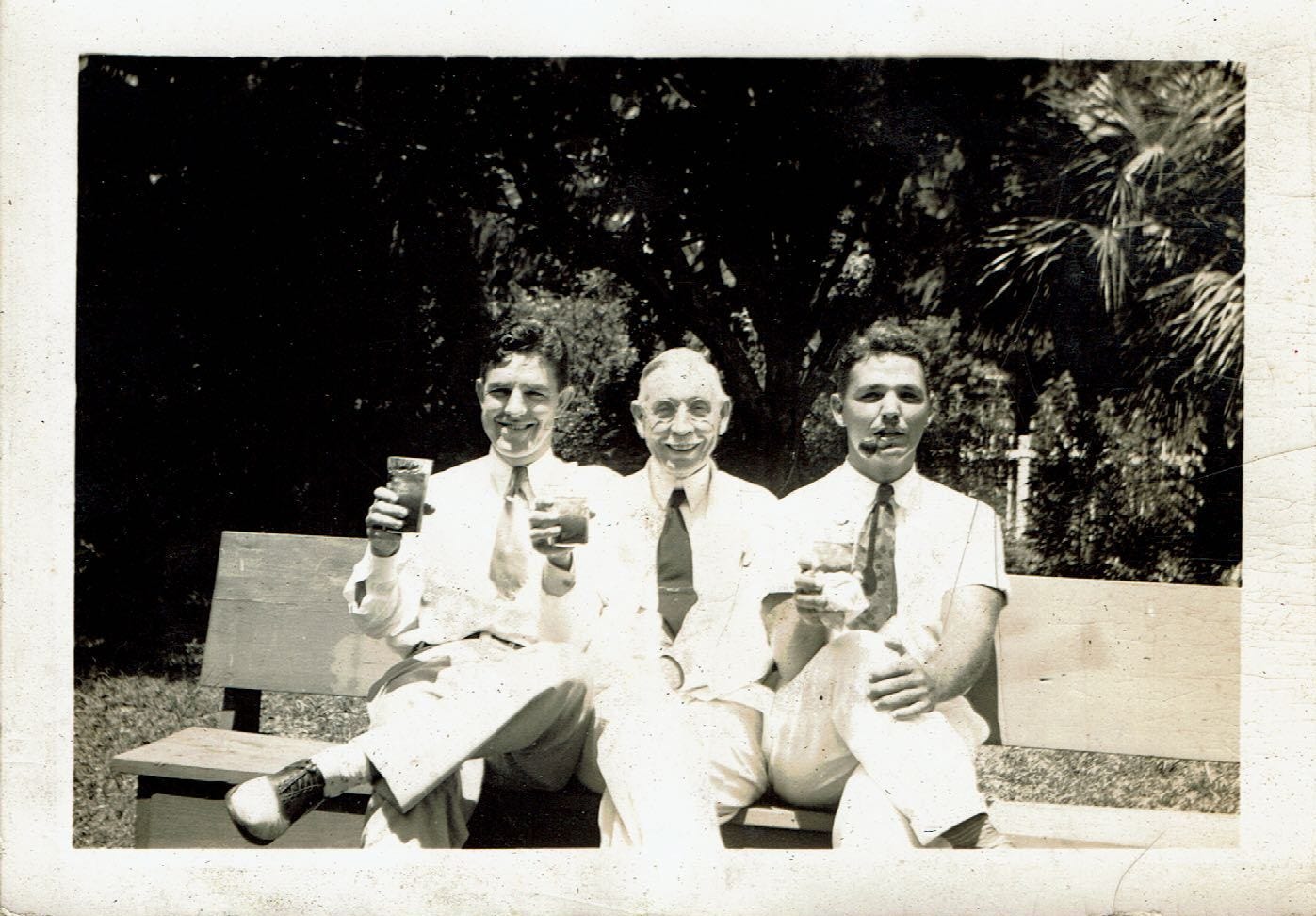
Our grandfather Leon H. Grayson, who moved to Washington, D.C. in 1935, preserved photos of visits to Isle of Hope, including following the death of his mother in May 1936. Leon, his five surviving siblings, and William and Lillian’s then-seven grandchildren all loved the Isle of Hope house, and gathered there often. When William died in March 1941, all greatly desired to find a way to keep the house in the family. Nevertheless, it was ultimately sold in April 1944.
A Visit to Bluff Drive
The streetcars no longer run and, excepting the marina, no public establishments remain at the former resort destination. Visitors are nonetheless still drawn to Isle of Hope by Wormsloe Historic Site and by scenic Bluff Drive, along which river-facing homes and cottages with tidy gardens are shaded by palms, pines, magnolias, and moss-draped live oaks.
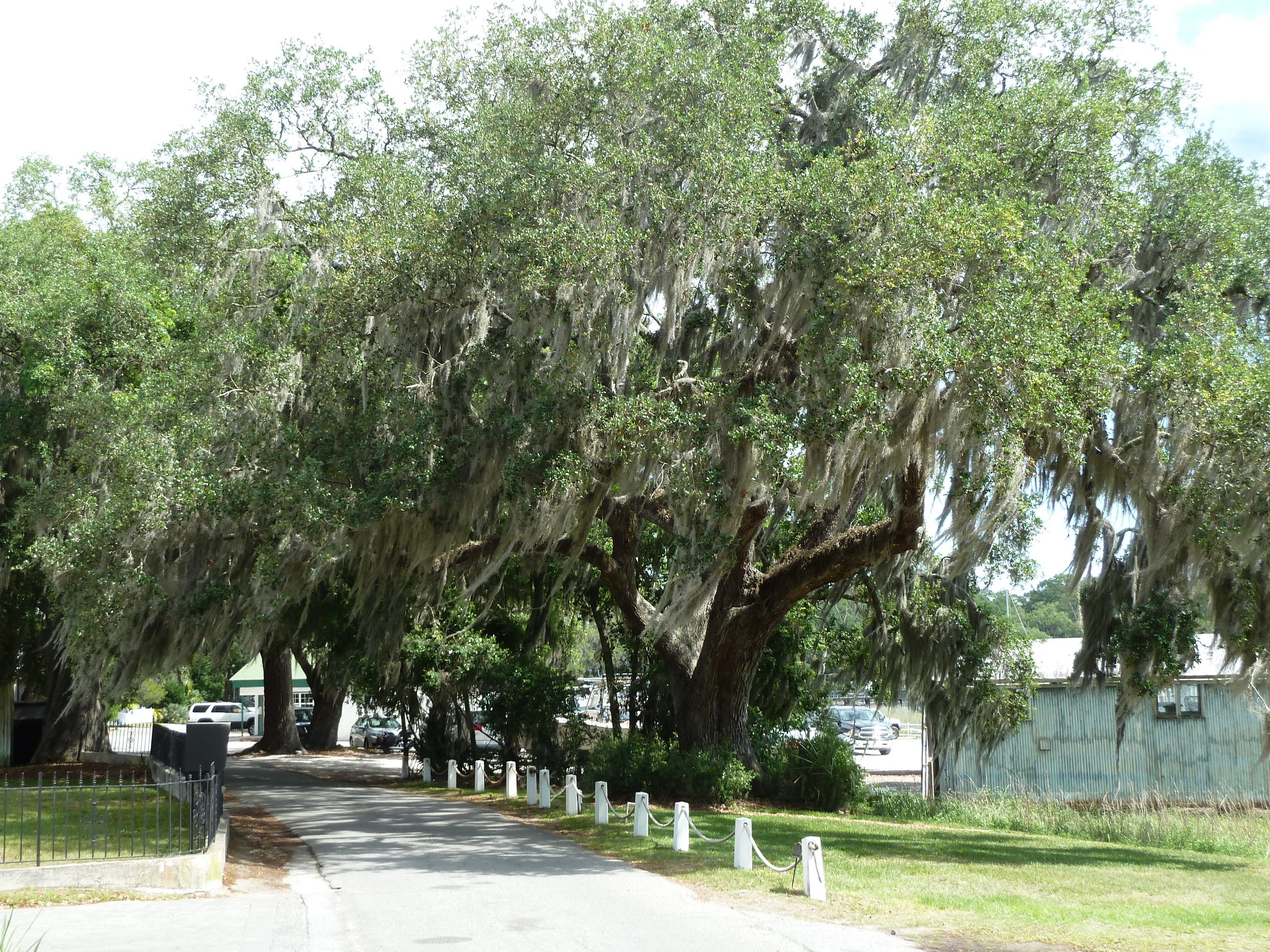
Encouraged to do so by my aging Grayson grandparents, my friend Peter and I walked Bluff Drive on a lovely summer day in 1989. Locals and visitors pushed strollers, held hands, and walked dogs along the scenic road.
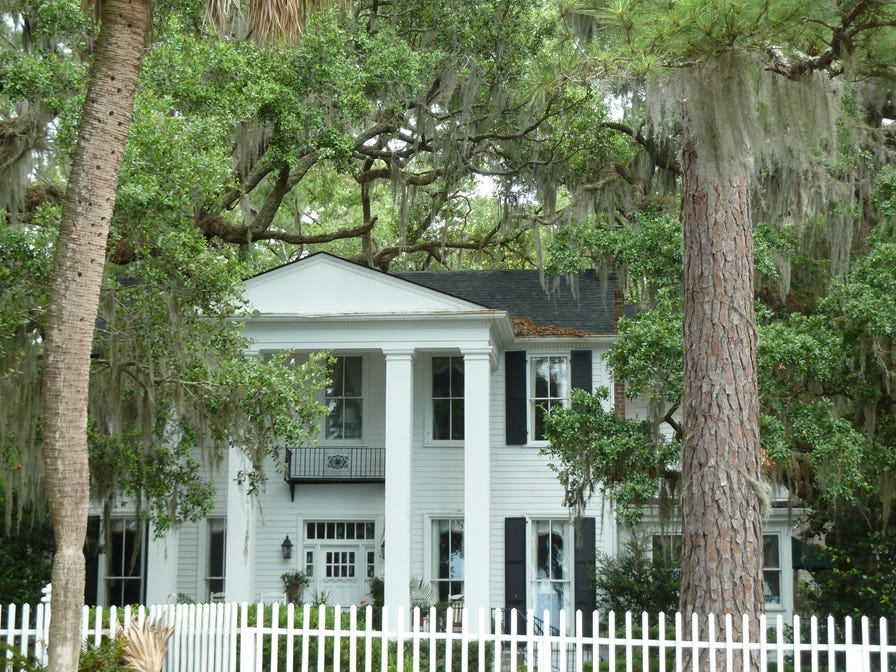
After traversing its length we asked a few if they knew which was the former Grayson home. A friendly couple sitting on their veranda was able to confidently point us to #9 Bluff Drive, a neat two-story home with a grand four-columned facade, a century-old moss-laden oak shading its roof and yard. The dining room and parlor chandeliers within are said to have been crafted by Savannah artisan Juliette Gordon Low, later the founder of the Girl Scouts of America. A private dock on the Skidaway River lay across the Bluff Drive.
It Was Our House First!
I returned a few years later with my bride Jean, who took photos of the house and the dock, where the then-homeowner was working on his boat. When I cautioned her to be more discrete, she defiantly proclaimed, “It was our house first!” I had to smile. We had been married less than a year, and fifty years had elapsed since “we” owned the property.
“Belleair, Isle of Hope, 1926”
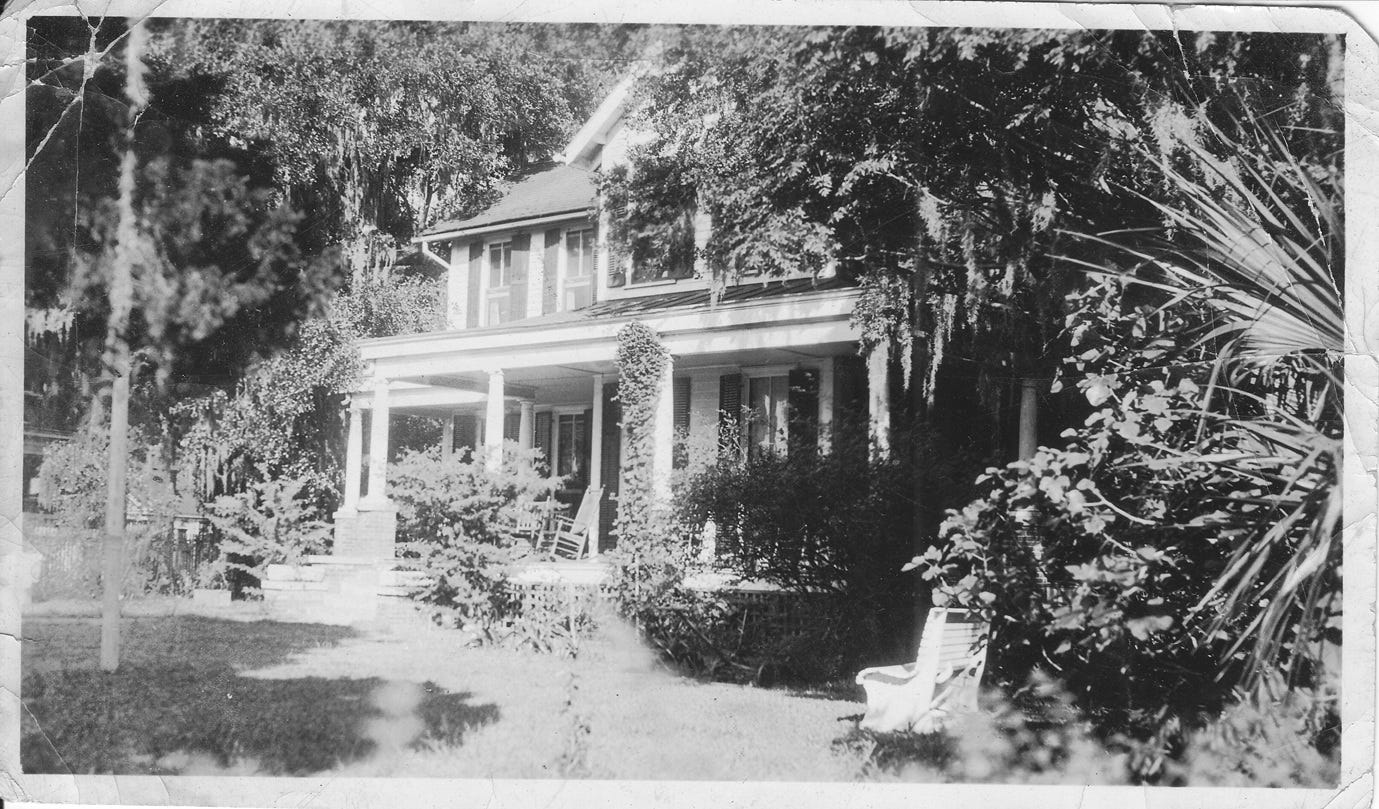
Some 20 years after that second visit, among some family papers I found a black and white photo of a house with the notation “Belleair, Isle of Hope, Sept 1926.” It looked nothing like the home I’d twice seen, and I wondered what house on Isle of Hope was depicted.
A Third Visit
Shortly after the discovery of this old photo my Grayson cousin Monroe Parsons joined me for a family history tour in and around Savannah. We visited and prayed at the Bonaventure Cemetery gravesite, where William and Lillian are interred along with three of their children, two daughters-in-law, three grandchildren, and even two grand-dogs. It was a providential visit to the Wormsloe Historic Site, however, that ultimately helped solve the photo mystery. There we found a book that gave a short history of Isle of Hope, and of each of the homes along Bluff Drive.4 Beneath a contemporary photo of the four-columned former Grayson home was a ca. 1890 photo of the same house.
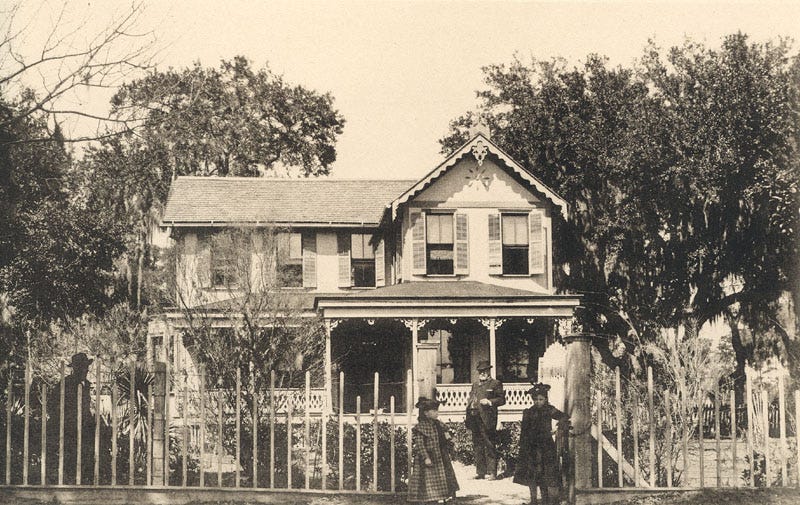
The 1926 “Belleair” house photo matches the Beckett home, though some changes had obviously occurred in the 36 years that elapsed. A close comparison shows the 1890 latticed porch rail was removed, at least two of the porch columns were given brick pedestals, the decorative flourishes at the porch roof line are missing, and the gingerbread trim along the gable was removed.
To supplement the old photo, a line in the Bluff Drive book was the final key in solving the mystery. The 1944 owners “removed an upstairs bedroom and added the front columns and a sunroom to create a more formal facade.” The near-identical shape and size of the ground floor windows and shutters in the 1926 and 2019 photos confirm it is the very same house, despite its other apparent differences.
“Belleair”
Finally, the name “Belleair” did not mean anything to the Isle of Hope Historical Association. Upon further reflection, however, as both William and Lillian Grayson were family historians, the explanation becomes clear. William’s third great-grandparents Benjamin and Susannah Grayson owned a plantation and manor house in 18th century Colonial Virginia. Though the house burned during the U.S. Civil War, and the property has long since been swallowed by suburbia, the historic Grayson Family vault still survives. The name of the adjoining manor house was Belle Air.
Portions of this post first appeared in slightly different forms in 2017 and 2019.
Gregory, G.A. “Savannah and its Surroundings,” 1890, Press of the Morning News, Savannah GA
Richardson, B.H. “Pleasure Guide for Northern Tourists and Invalids,” 1875, Morning News Steam Job Print, Savannah GA
“Sales of Homes at Isle of Hope: Several Houses Have Changed Hands at Resort,” The Savannah Press, 27 Feb 1922 pg. 12
Cooper, Polly Wylly, Bluff Drive & the Isle of Hope Churches, 2011, Isle of Hope Historical Association. #9 Bluff Drive write-up is on page 11, which mentions the Juliette Gordon Low chandeliers.